Chef's Spotlight: Kenji Yamamoto
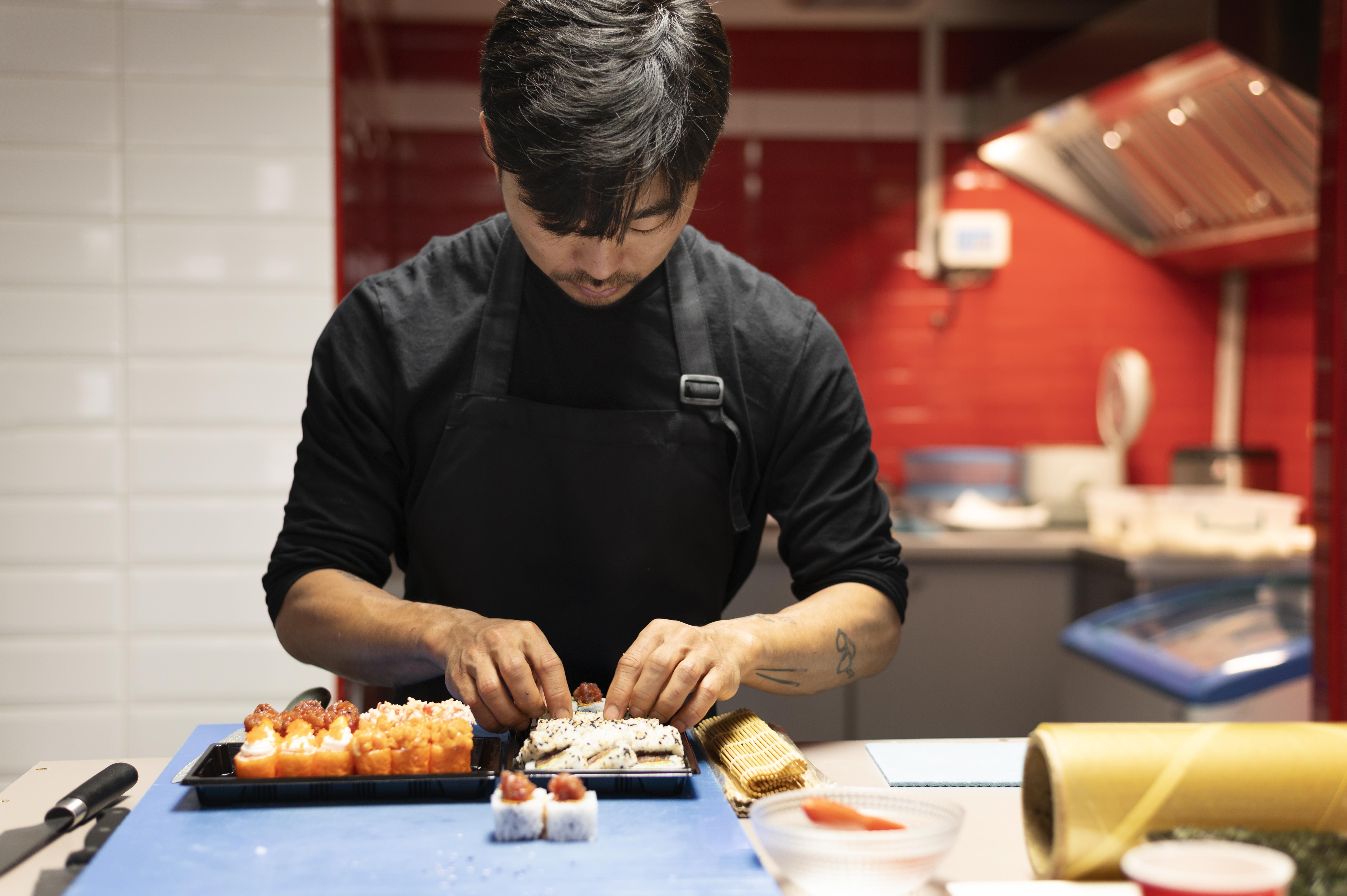
The moment you meet Master Sushi Chef Kenji Yamamoto, you're struck by his calm presence and thoughtful manner—qualities that infuse every aspect of his work at Ridgeview Manor's acclaimed Sakura Sushi. As he welcomes me into his domain before the evening service begins, I notice his hands—strong yet remarkably gentle as he demonstrates forming the perfect rice ball. "The rice is everything," he explains in his measured English, occasionally pausing to find precisely the right word. "In Japan, sushi apprentices spend years learning to prepare rice before they ever touch fish. Here in the Canadian Rockies, I've had to adapt the traditional methods to account for the mountain water, which has different mineral content than Tokyo's. It created challenges at first, but now I believe it gives our sushi a unique character you won't find elsewhere." This attention to detail and respect for ingredients whilst adapting to local conditions defines Chef Yamamoto's philosophy, which has earned Sakura Sushi recognition as one of the finest Japanese restaurants in Western Canada.
When I ask about his journey from Tokyo's prestigious Tsukiji Market to the Canadian Rockies, Chef Yamamoto's eyes light up. "It was a difficult decision to leave Japan, where traditions are so deeply rooted. But I was fascinated by the idea of bringing authentic Japanese cuisine to a completely different landscape. When I first arrived and saw Lake Louise—that incredible blue surrounded by mountains—it reminded me of traditional Japanese paintings of Mount Fuji with its reflecting lakes. I felt an unexpected connection." This vision of cultural bridging guides his approach to menu development, where traditional Japanese techniques meet Canadian ingredients. "We receive the finest fish flown in from both Japan and the Pacific Northwest, but I've also discovered wonderful local ingredients that work beautifully in Japanese cuisine. The mountain herbs growing wild here have similar flavour profiles to some Japanese varieties, and Alberta-raised Wagyu beef rivals the finest from Japan when prepared with traditional Japanese methods."
Innovation within tradition is a recurring theme in our conversation, particularly as Chef Yamamoto discusses the challenges of maintaining authenticity whilst appealing to diverse palates. "Many guests come to us with different levels of experience with Japanese cuisine. Some are connoisseurs who have dined at the finest establishments in Tokyo and expect that level of craftsmanship. Others might be trying sushi for the first time. My responsibility is to honour both—to never compromise on quality and technique, whilst creating experiences that welcome newcomers." This philosophy manifests in Sakura's popular omakase experience, where Chef Yamamoto personally prepares and serves a progression of dishes tailored to each guest's preferences and experience level. "Through omakase, I can guide guests on a journey, starting with flavours that feel familiar and gradually introducing more complex traditional preparations. The intimate setting allows me to gauge reactions and adjust accordingly. It becomes a conversation through food—this is the heart of Japanese dining tradition."
As our interview concludes, Chef Yamamoto invites me to observe his preparation for the evening service—a ritual that begins hours before the first guest arrives. I watch as he meditatively sharpens his collection of handcrafted knives, some of which have been in his possession for decades. "Each knife has a specific purpose and personality," he explains. "Knowing when and how to use each one is essential to respecting the ingredients." This respect extends to his mentorship of the young chefs working under his guidance, as he patiently demonstrates techniques whilst sharing the cultural and historical context behind each preparation. When I ask what he hopes guests take away from dining at Sakura, his answer reveals the depth of thought behind each plate: "Beyond the flavours, I hope they experience a moment of harmony—between tradition and innovation, between Japanese heritage and Canadian landscape, between technical precision and artistic expression. In Japan, we call this balance 'wa'—it is the essence of what I strive to create every day." As the first reservations of the evening arrive, Chef Yamamoto bows slightly and returns to his craft, his focus absolute as he begins transforming the finest ingredients into edible art that bridges cultures and creates unforgettable moments for Ridgeview Manor's guests.